New to Homeschooling? Start With Your Real Life
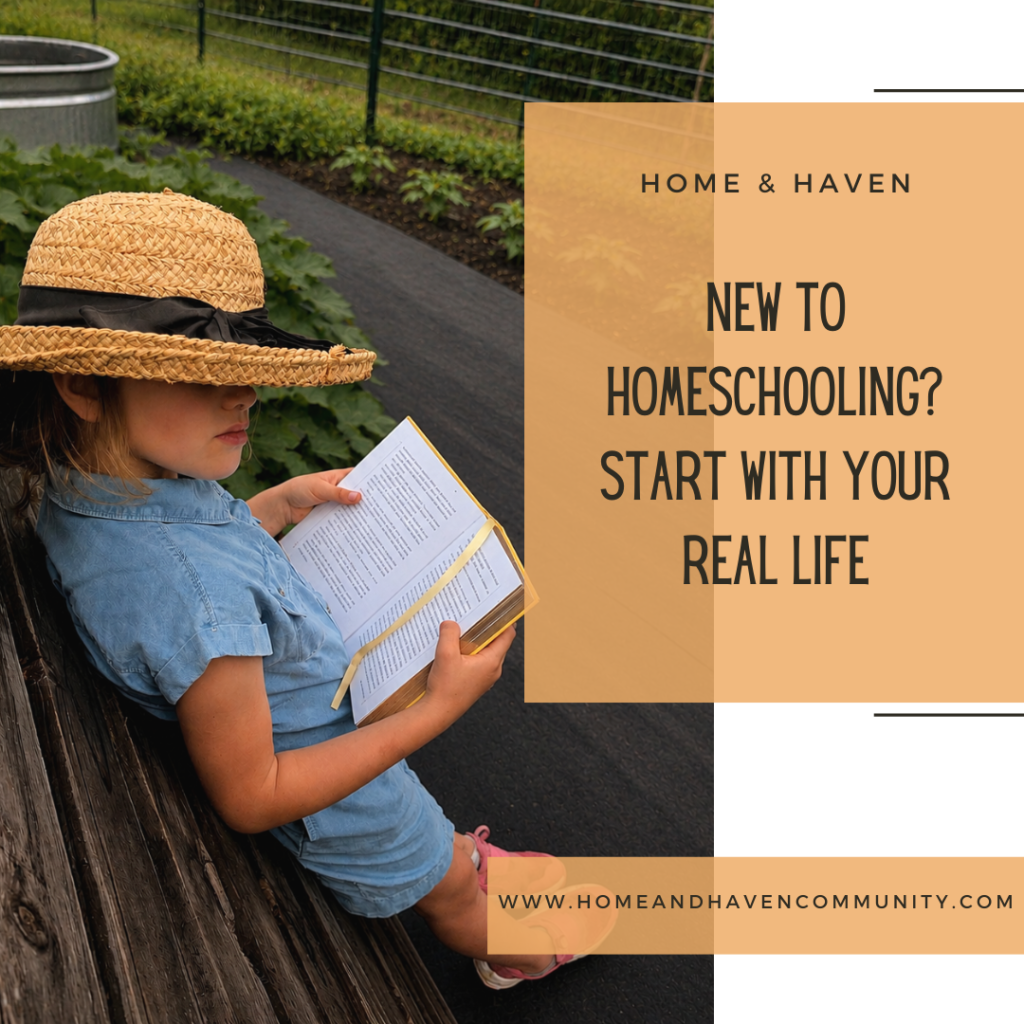
New to Homeschooling? Start With Your Real Life
The biggest mistake I see new homeschool moms make is recreating a classroom in your home. Instead, we need to focus on real life and how it naturally fits into homeschooling.
You do not need a wall full of color-coded schedules or a perfectly curated homeschool room before you begin. You do not need every curriculum mapped out six months in advance. And despite what social media may quietly suggest, you do not need to turn your home into a miniature version of traditional school in order for your children to learn well.
Many mothers enter homeschooling carrying an invisible pressure that tells them they must suddenly become teacher, administrator, curriculum expert, homemaker, and event coordinator all at once. Somewhere along the way, homeschooling became tangled up with performance.
Remeber.
Homeschooling was never meant to feel like a constant performance.
At its heart, homeschooling is simply learning woven into daily life. It is discipleship around the breakfast table. It is reading aloud on the couch. It is children learning how to contribute meaningfully inside the life of a family. It is slower rhythms, real conversations, and hands-on learning that actually matters.
And if you are just beginning this journey, there is something deeply freeing you need to hear:
You need to hear

The Pressure to Do It All When Homeschooling
When families first begin homeschooling, the pressure can feel as if you are set up to fail.
You begin researching homeschool curriculum and suddenly discover an endless world of opinions. One family follows a classical homeschool model with Latin and formal logic. Another embraces a Charlotte Mason approach with nature journals and poetry tea time. Someone else has a beautifully organized homeschool room with matching baskets, morning menus, and laminated schedules.
Meanwhile, you may simply be trying to keep up with laundry while figuring out how to teach phonics without everyone crying before lunch.
The comparison can become exhausting very quickly.
Many new homeschool moms quietly wonder if they are already falling behind before they have even fully begun. They question whether they purchased the right curriculum, whether their daily schedule is structured enough, or whether their children are somehow missing something essential.
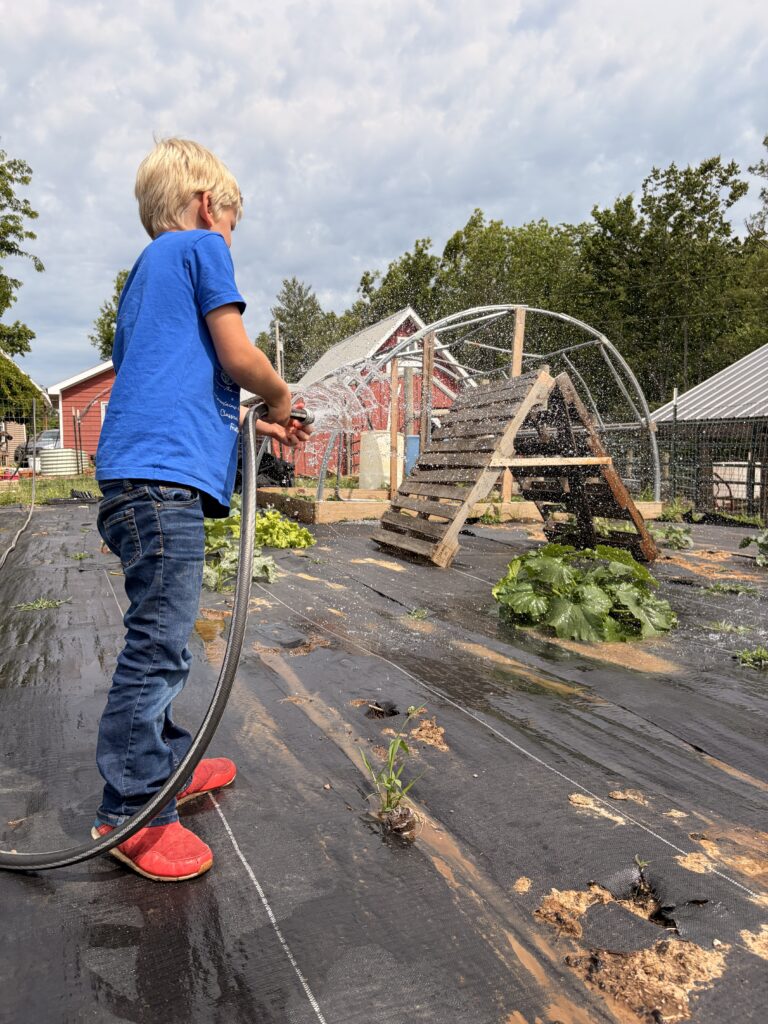
Start With Real Life
Many new homeschool moms quietly wonder if they are already falling behind before they have even fully begun. They question whether they purchased the right curriculum, whether their daily schedule is structured enough, or whether their children are somehow missing something essential.
Home & Haven
But often, the pressure itself is the problem.
The pressure to perfectly replicate school at home can distract mothers from the very thing that makes homeschooling beautiful in the first place: the freedom to build a life centered around meaningful learning instead of constant performance.
The truth is, your homeschool does not need to look impressive in order to be deeply effective.
Children do not flourish because their days are packed full of the most expensive curriculum.
They flourish because they are being taught by the people who care most about their souls, not just their academic transcript.
What Your Child Actually Needs First
Before children need elaborate lesson plans, they need something far more foundational.
They need home.
Not perfection.
Or constant entertainment.
And not a childhood spent rushing from one structured activity to another (This is something we have to guard so carefully in our home).
They need to feel rooted in the rhythms of family life and to learn what it means to actually live.
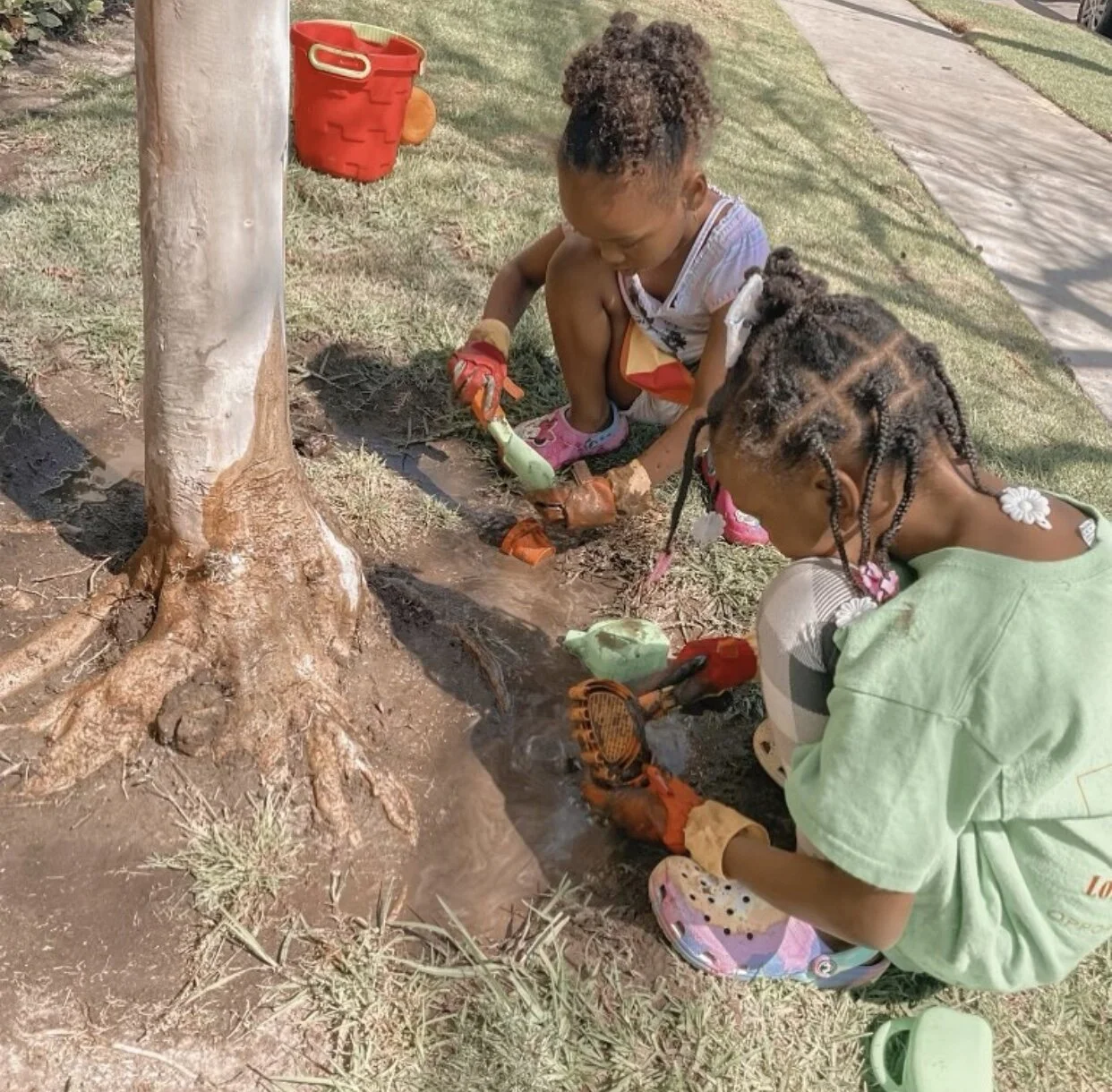
Children thrive when they are included in the ordinary work of the home because they learn through participation long before they learn through memorization. Our children absorb far more from living alongside us than we often realize.
They watch how meals are prepared.
They notice how routines shift with the seasons.
They learn patience while helping fold towels.
They learn responsibility by caring for animals.
They begin to understand stewardship by tending gardens, washing dishes, or helping prepare food for the family table.
And if we are honest, the world our children are growing up in has quietly removed them from many of the very things that teach them how to live.
Modern childhood often separates children from meaningful contribution. They are entertained constantly but rarely needed. Included occasionally but seldom entrusted with real responsibility.
Confidence is Often Built Through Contribution.
When children are invited into meaningful work, something begins to shift. They no longer feel like passive observers in family life. They begin to understand that they are capable, valuable, and able to participate in the world around them.
This kind of learning cannot always be measured on a worksheet, but it forms something much deeper inside a child.
Scripture reflects this beautifully.
In Deuteronomy 6, God calls parents to teach their children through the ordinary rhythms of daily life — while sitting in the house, walking along the road, rising in the morning, and resting at night. He never intended learning to stay confined to a desk.
Real learning has always grown from real living.
Why Life Skills Are the Best Place to Begin
For overwhelmed homeschool moms, life skills offer one of the gentlest and most meaningful starting places possible.
Unlike traditional academic settings that often center around testing, comparison, and performance, life skills learning feels natural. Children learn through movement, participation, conversation, and repetition. Instead of constantly asking whether they are “doing enough,” families begin building rhythms that feel purposeful and sustainable.
Life skills learning removes some of the immediate pressure many homeschool families feel during the early years.
Because when a child learns how to prepare a simple meal, help care for younger siblings, plant seeds in the garden, preserve food for winter, or contribute to the daily rhythms of home, they are developing far more than practical abilities.
They are developing confidence.
They are learning problem-solving, communication, perseverance, responsibility, and stewardship in ways that feel deeply connected to real life.
And perhaps most importantly, they are learning alongside you rather than separated from you.
This is one of the quiet gifts of homeschooling.
Children do not have to spend most of their waking hours removed from the meaningful work of family life. Instead, they can grow up participating in it.
The kitchen becomes a classroom.
The garden becomes a science lesson.
The laundry room becomes an opportunity for responsibility and contribution.
The home itself becomes a place where learning naturally unfolds.
This kind of hands-on homeschooling creates connection before comparison ever enters the picture.
What Real-Life Homeschooling Actually Looks Like
Real-life learning often looks much simpler than many mothers expect.
Homeschooling looks like a child standing beside you at the counter measuring flour while learning fractions without even realizing it. It looks like watering tomato plants in the morning and discussing why sunlight, soil, and seasons matter. It can look like folding warm towels together while practicing conversation, sequencing, and responsibility.
For some families, it may mean gathering eggs before breakfast or helping care for livestock in the evenings (for us, its both!). For others, it may mean learning how to organize pantry shelves, preserve vegetables from the garden, sew simple projects, or help maintain tools and appliances around the home.
These moments may appear ordinary from the outside, but they are building something meaningful beneath the surface. Often, I have found that it is these unseen growths that mean the most.
Children are learning how to live a life that is more than consumption.
They are learning that homes require care.
That meals require preparation.
That gardens require patience.
That families function best when everyone contributes because each person holds immense value.
And while these moments may not resemble traditional school, they often produce deeply capable children who understand responsibility, stewardship, creativity, and perseverance in practical ways.
This is the beauty of simple homeschooling rooted in real life:
learning becomes part of the home itself rather than something completely separated from it.
You Don’t Have to Figure This Out Alone
One of the hardest parts of beginning homeschool can be the constant feeling that you should somehow already know how to do all of this.
The curriculum choices.
The schedules.
The routines.
The planning.
It can feel overwhelming quickly.
But homeschooling was never meant to become another place where mothers carry impossible expectations alone.
As a homeschool mom, you probably don't need another complicated system or curriculum.
You simply need a gentle starting place. A rhythm. A guide. A resource that helps you simplify instead of adding more noise.
That is exactly why we created the Home & Haven Resource Library.
We created our resources to help families build meaningful, Christ-centered homeschool rhythms through real-life learning. Our practical life skills bundles, seasonal unit studies, and hands-on gardening resources equip families to cultivate connection, simplicity, and purposeful learning within the home.
Because you do not need to overhaul your entire life overnight to homeschool well.
You simply need a place to begin.
Life Skills School
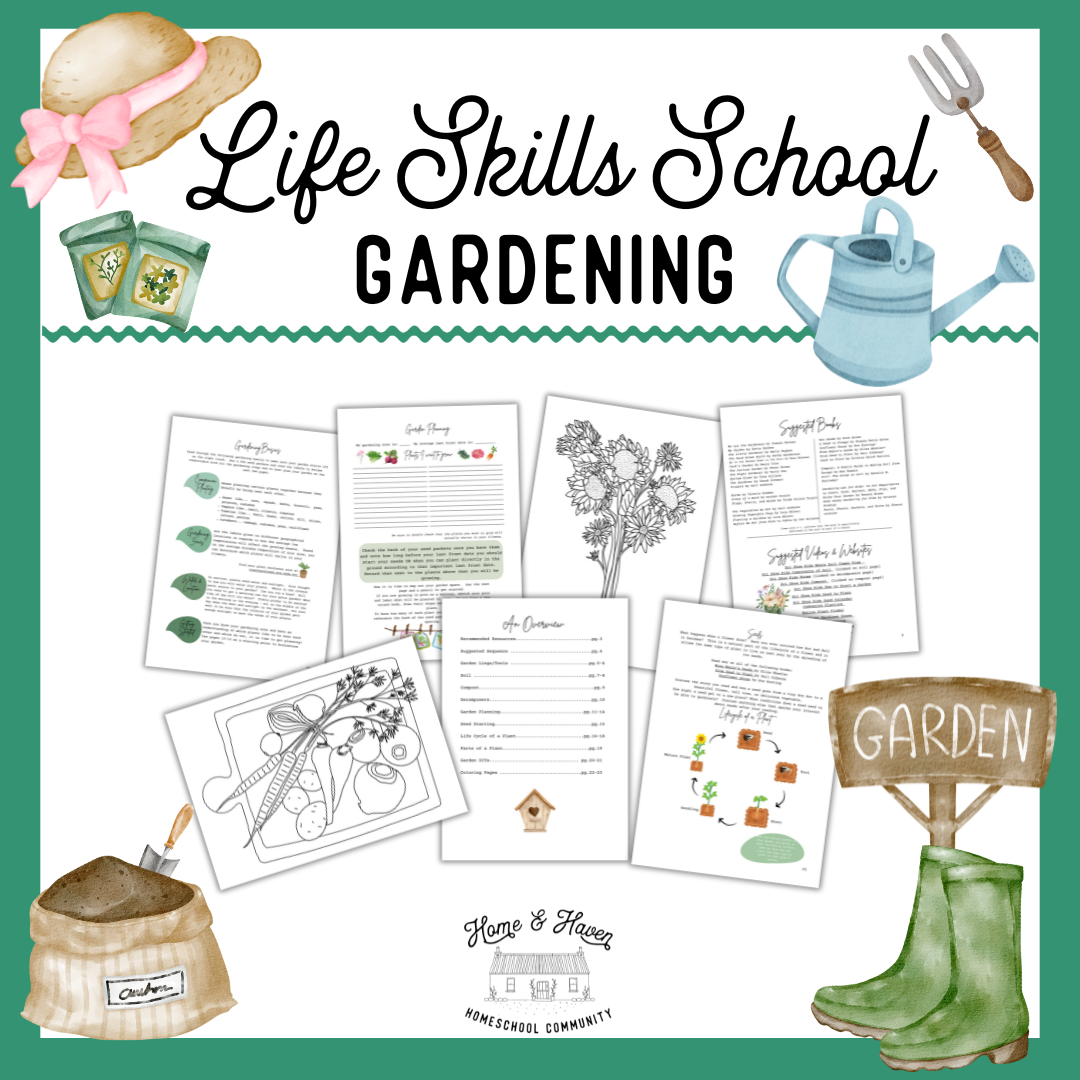
Garden Life Skills
$15
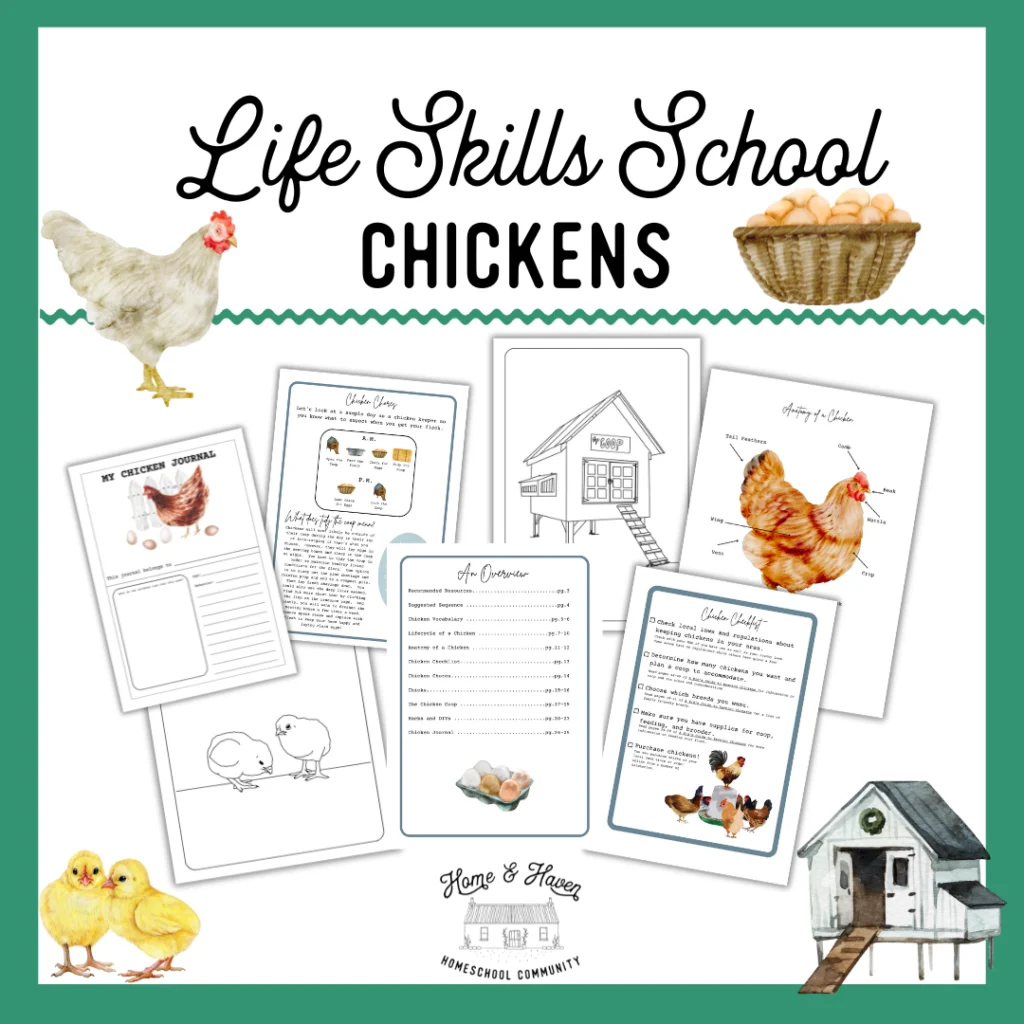
Chicken Life Skills
$15
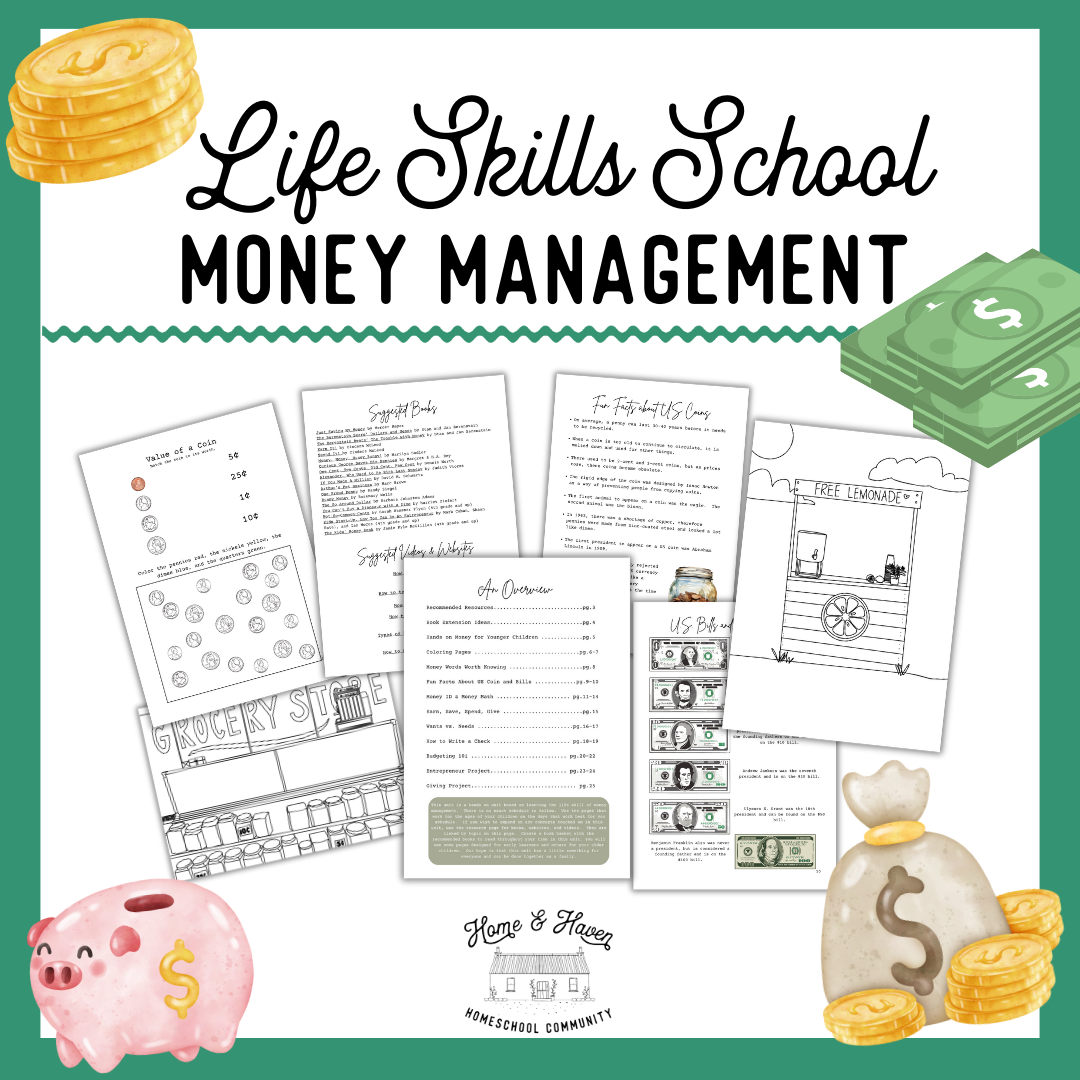
Money Life Skills
$15
Take Your First Step Into Real Life Homeschooling With Confidence
If you are feeling overwhelmed as a new homeschool mom, start smaller than you think you need to.
Start with your home.
Start with intentional rhythms.
Start with real life- not just an instagram highlight reel.
And if you want support along the way, the Home & Haven Resource Library was created to help you build a homeschool that feels peaceful, practical, biblical and deeply meaningful.
Start Here:
- Homeschooling Toolkit (Free Download)
- Chicken Bundle
- Gardening Bundle
- Why Life Skills Matter More Than Ever
Your children do not need a perfect homeschool.
They need a life that teaches them how to live well.
More from our Homeschool Store
LET'S BEGIN.
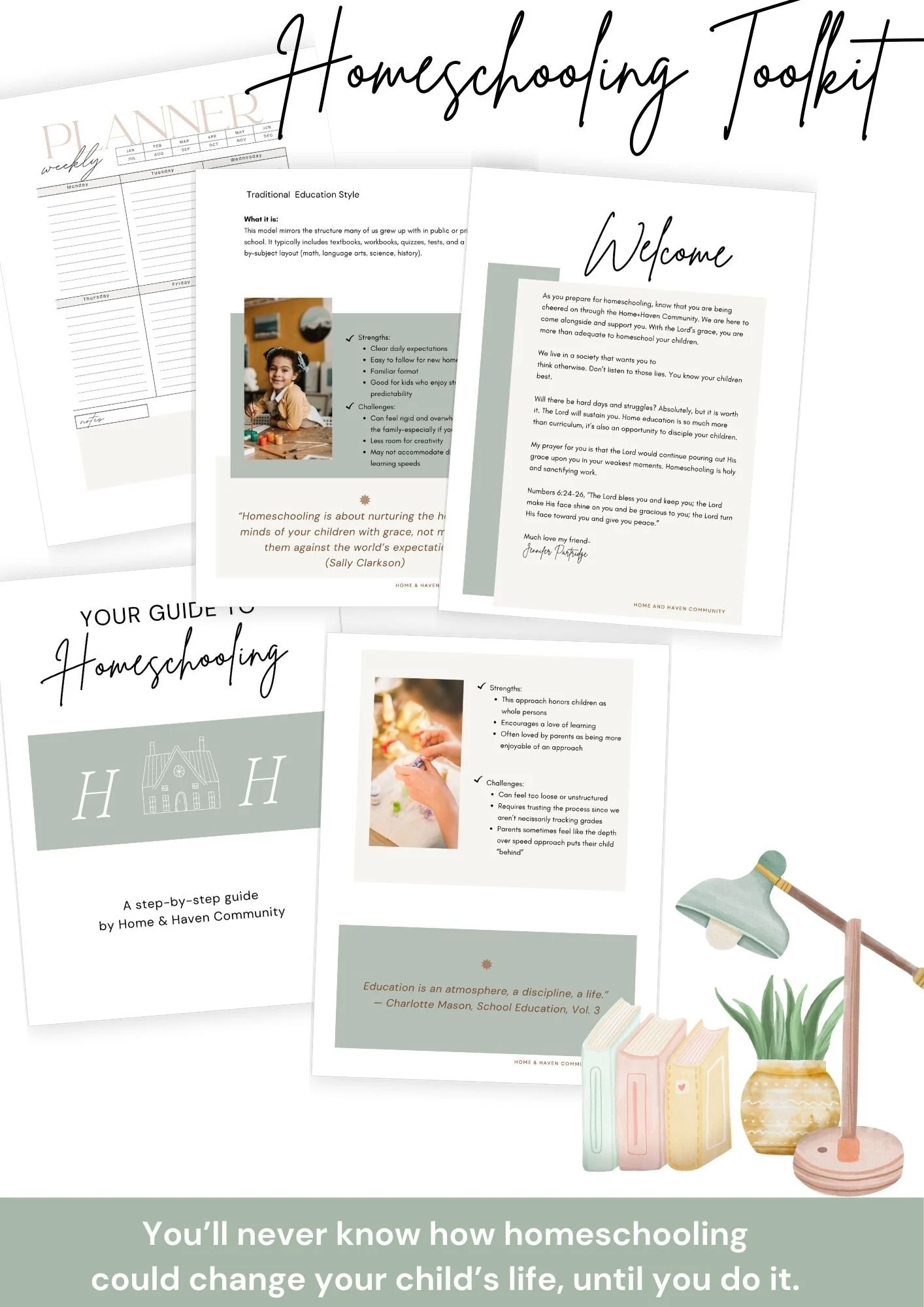
Homeschool Toolkit
FREE- $0.00
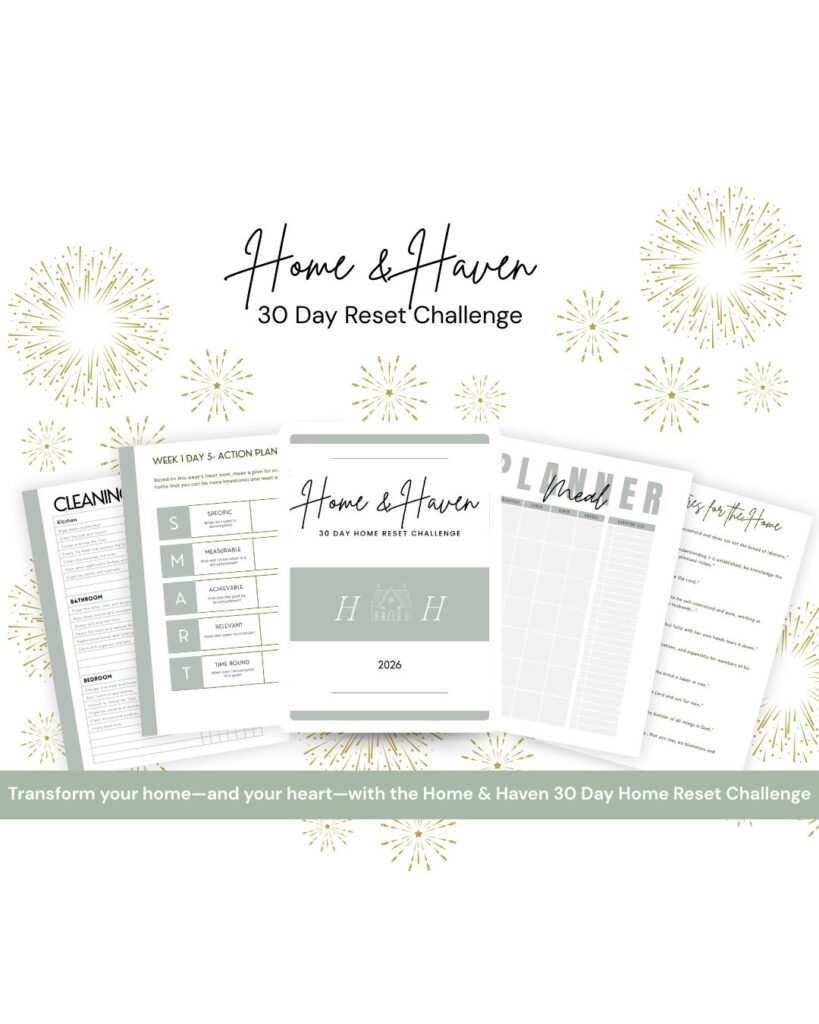
HOME & HAVEN REST
$15

The Homeschool Vault
$98